
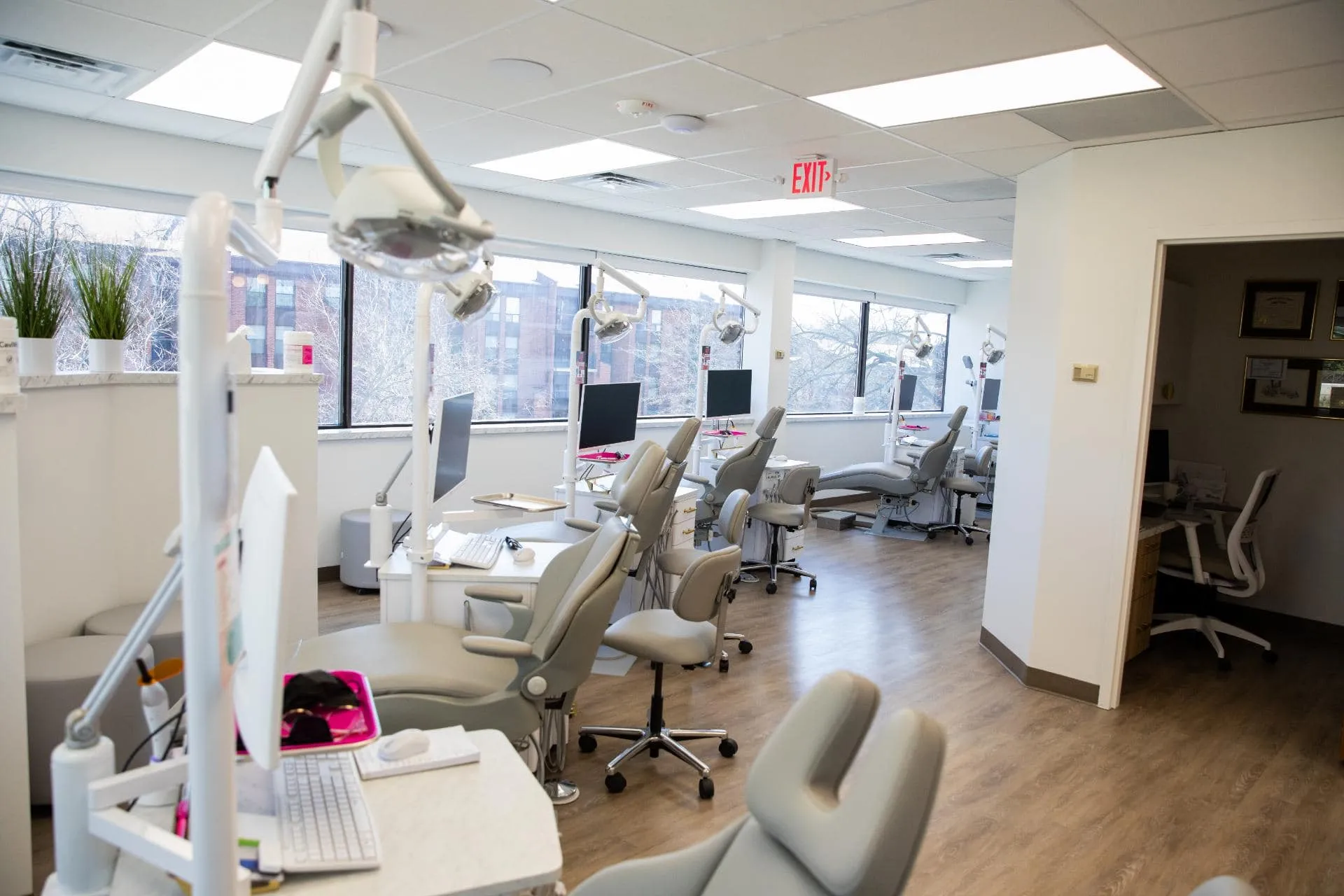
What Does Disability-Friendly Orthodontic Care Mean?
Orthodontic practices accommodate patients with physical or developmental disabilities by adjusting facilities, communication styles, and treatment plans to fit each person's needs. This includes wheelchair-accessible spaces, sensory-friendly environments, extended appointment times, visual communication tools, and caregiver involvement throughout care.
Disability-friendly care goes beyond meeting ADA requirements. While ADA compliance sets the baseline for ramps, doorways, and restrooms, truly accessible orthodontics looks at the whole person. That means thinking about lighting, sound, scheduling, and how doctors explain each step.
There's a difference between special needs dentistry and orthodontic accommodations. Special needs dentistry often focuses on general oral health for patients who need extra support. Orthodontic accommodations focus on making braces, Invisalign, and bite correction accessible while keeping the patient comfortable and respected. Our doctors are AAO members who bring real experience to this work.
At Otto Orthodontics, ortho is for everyone! Our team adapts to physical, sensory, and developmental needs so every patient feels welcome from the first visit forward.
How St. Louis Orthodontic Offices Accommodate Patients With Disabilities
Orthodontic practices accommodate patients with disabilities through pre-visit planning, accessible facilities, sensory adjustments, and flexible communication. Common steps include detailed intake calls, wheelchair-friendly operatories, quiet scheduling, tell-show-do techniques, longer appointment slots, and caregiver participation. These adjustments help patients feel safe, understood, and in control during every visit at our St. Louis area practice.
Here's a closer look at how it works:
-
Pre-visit intake. Before the first appointment, our team gathers information about sensory triggers, mobility needs, communication preferences, and medical history. This lets us plan ahead instead of adjusting on the spot.
-
Accessible facilities. Entrances, hallways, and operatories are built to support wheelchairs, walkers, and transfer needs. Staff can assist with safe transfers when requested.
-
Sensory-friendly options. Dimmed lights, reduced noise, weighted lap pads, and quiet scheduling windows help patients with autism, ADHD, or sensory processing differences feel calmer.
-
Desensitization visits. For patients with developmental disabilities, short "meet and greet" visits build familiarity. Our doctors use tell-show-do techniques, showing each tool before using it.
-
Extended appointments. Longer time blocks reduce rushing. Patients can take breaks, ask questions, and process information at their own pace.
-
Caregiver involvement. Parents, guardians, and support staff are welcome to stay during consults and adjustments. They often know the patient best, and their input shapes the care plan.
According to the American Association of Orthodontists, individualized planning and clear communication improve treatment outcomes for patients with special healthcare needs. In practice, that might mean a patient who once panicked at the sound of a handpiece now relaxes because our team walked through each tool beforehand. Our amazing team applies these principles at every Otto Orthodontics location across the St. Louis area.
Benefits of Accessible Orthodontic Care
When orthodontic care is built to include everyone, the benefits reach far beyond straighter teeth. Accessible care lowers anxiety, improves oral health outcomes, strengthens treatment compliance, and gives families dignity and comfort throughout the experience. The points below break down how each benefit shows up in daily practice.
How does accessible care improve oral health outcomes?
-
Better oral health outcomes. Patients who once avoided routine visits because of anxiety or access barriers can now receive consistent care. That means fewer cavities, healthier gums, and a more functional bite.
-
Reduced anxiety. Predictable, sensory-aware visits help patients feel safe. When the lights, sounds, and routines are familiar, stress drops and cooperation grows.
-
Stronger treatment compliance. Visual schedules, social stories, and clear step-by-step explanations help patients understand what's expected. This leads to better home care and fewer broken brackets.
Why does accessible care matter for families?
-
Dignity and comfort for families. Caregivers often carry a heavy load. An inclusive practice respects that effort and creates space for the whole family to feel supported.
-
Early intervention benefits. Two-phase treatment can be especially valuable for young patients with developmental differences. Catching jaw and bite issues early may reduce the need for more involved care later on.
Accessible care isn't a side service. It's part of the 5-star care we offer at Otto Orthodontics, and it helps every patient get ready to rock a new smile.
Standard Visits vs. Accommodated Visits: What's Different?
The core goal of every orthodontic visit is the same: a healthy bite and an awesome smile. What changes are the details that make the visit work for the patient in front of us at our St. Louis area practice.
| Visit Element | Standard Visit | Accommodated Visit |
|---|---|---|
| Appointment length | 20-45 minutes | 45-90 minutes, with breaks as needed |
| Scheduling | Standard hours | Quiet times, first or last slot of the day |
| Communication | Verbal explanations | Verbal plus visual aids, social stories, picture cards |
| Environment | Normal lighting and music | Dimmed lights, lower volume, sensory tools offered |
| Equipment access | Standard chair entry | Wheelchair transfer support, padded positioning |
| Caregiver role | Often waits in lobby | Stays chairside, helps with communication and comfort |
| Treatment pacing | Steady, single appointment | Broken into smaller steps across multiple visits if helpful |
Communication is one of the biggest differences. Some patients respond best to verbal cues. Others do better with picture schedules, a tablet showing each step, or a social story they reviewed at home. Our doctors and team meet patients where they are.
Caregivers also play a different role during accommodated visits. They often help interpret reactions, offer reassurance, and share what works at home. That partnership makes every appointment smoother and keeps the whole experience calm.
What Affects the Cost of Accommodated Orthodontic Treatment?
The cost of accommodated orthodontic treatment depends mostly on the treatment type itself, not the accommodations. Braces, Invisalign, and two-phase plans each have their own base pricing. Most accessibility adjustments, like longer visits, sensory tools, or caregiver involvement, are included at no extra charge at our St. Louis area practice.
A few things to keep in mind:
-
Treatment type drives the base cost. Traditional braces, clear braces, and Invisalign each have different price ranges. The accommodations themselves don't add line items to your treatment plan.
-
Insurance and Medicaid coverage. Some plans offer expanded benefits for patients with documented special healthcare needs. Coverage varies, so it helps to bring your insurance details to the complimentary consult.
-
Scheduling impact, not fee impact. Longer or more frequent visits affect the calendar, not the bill. We build that time in so the patient never feels rushed.
-
Simple & affordable options. Low monthly payment plans help families manage the investment without stress.
The clearest way to understand cost is to schedule a complimentary consult. Our doctors review your situation, answer questions, and outline what to expect, with no pressure and no surprise fees.
Is Orthodontic Treatment Right for Patients With Disabilities?
Yes, many patients with physical or developmental disabilities are excellent candidates for orthodontic treatment. The right fit depends on a few personal factors, and our doctors take time to evaluate each one during the complimentary consult, so your orthodontic journey starts with a plan built around you.
Things we consider:
-
Oral hygiene support. Patients who can brush and floss independently, or who have a caregiver helping with daily care, tend to do very well with braces or Invisalign.
-
Tolerance for appliances. Some patients adapt quickly to the feel of brackets or aligners. Others may need a gradual introduction. Either approach can work.
-
Sensory preferences. Invisalign's removable aligners suit some patients with sensory sensitivities, since there are no wires or brackets against the cheeks. For others, the routine of fixed braces is actually easier than remembering to wear aligners.
-
Caregiver involvement. Strong caregiver support often makes fixed braces a great option, especially for younger patients or those who need help with daily routines.
If you're not sure where to start, our virtual consult and complimentary consult options make it easy. You can share photos, ask questions, and get honest feedback before stepping into our St. Louis area practice.
Our doctors, including Dr. Genevieve Otto, Dr. Kirsten Karkow, Dr. Andrew Larkin, Dr. Katelyn Roland, and Dr. Sara Patterson, are AAO members with experience treating patients of all abilities. As a diamond plus Invisalign provider, Otto Orthodontics offers many treatment paths so we can match the right one to you.
Frequently Asked Questions
Are orthodontic offices wheelchair accessible?
Yes, our modern practice is designed to meet ADA accessibility standards. This includes wheelchair-friendly entrances, wide hallways, accessible restrooms, and operatories that allow safe positioning. At Otto Orthodontics, our team is also trained to assist with transfers and to adapt chair positioning so the patient stays comfortable throughout the visit.
How do offices help patients with autism or sensory sensitivities?
Our practice helps by offering quiet scheduling, dimmed lights, lower noise levels, and visual tools that show each step before it happens. Desensitization visits let patients meet the team and explore the space before any treatment begins. Social stories, picture schedules, and weighted lap pads are often available on request.
Can caregivers stay during the appointment?
Absolutely. Caregivers are welcome to stay during consults, adjustments, and any part of treatment where their support is helpful. Many patients feel calmer with a familiar person nearby, and caregivers often share insights that help our doctors deliver better care.
Does insurance cover orthodontics for special needs patients?
Coverage varies by plan. Some insurance providers and Medicaid programs offer expanded orthodontic benefits when treatment is medically necessary or when the patient has documented special healthcare needs. Our team can review your coverage during the complimentary consult and help you understand your options, including low monthly payment plans.
How should families prepare a patient with a disability for a first visit?
Share what helps your loved one feel calm at medical appointments. Bring favorite comfort items, headphones, or visual supports. Let our team know about sensory triggers, communication preferences, and any past dental experiences ahead of time. A pre-visit phone call or tour of the office can also make the first appointment feel familiar and safe.
Otto Orthodontics welcomes everyone, of all ages and abilities. Our extraordinary team is ready to listen, adapt, and help you or your loved one feel right at home. You can request your complimentary consult whenever you're ready to learn more about accessible orthodontic care.