
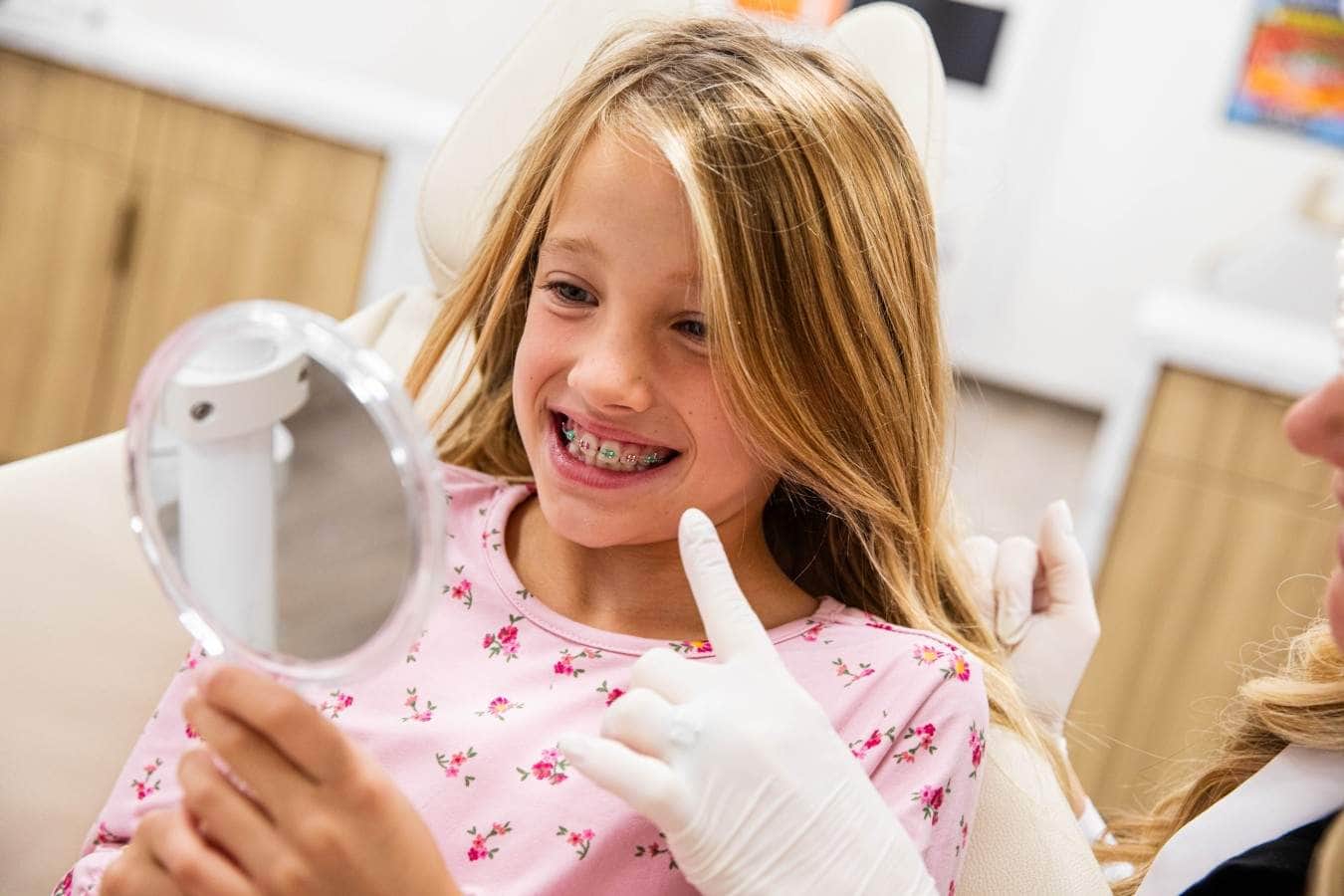
When Should Your Child First See an Orthodontist?
Children should first see an orthodontist by age 7, and that early visit is the foundation for understanding whether braces for kids will be part of your child's future. At this age, enough permanent teeth have emerged for a doctor to spot developing issues like crossbites, crowding, or jaw growth concerns. Early evaluation doesn't always mean early treatment. It gives your child's doctor a chance to monitor growth and step in at the right time if needed.
The American Association of Orthodontists recommends this timeline because your child's first permanent molars and incisors have typically come in by age 7. These teeth reveal how the bite is developing and whether there's enough room for the rest of the permanent teeth.
Our AAO-member orthodontists at Otto Orthodontics see kids at this age all the time. Most don't need treatment right away. Instead, we establish a baseline and keep an eye on how things are progressing. Think of it as getting ahead of potential concerns before they become bigger ones. For St. Louis area families weighing braces for kids, an early check brings clarity and peace of mind.
What Happens at Your Child's First Orthodontic Visit
That first appointment is simple and low-pressure. Here's what you can expect:
-
Medical and dental history review. We'll ask about your child's health, any breathing issues, and habits like thumb-sucking.
-
Visual examination. The doctor checks teeth, jaw alignment, and how the bite comes together.
-
Digital X-rays or 3D imaging. If needed, our AAO-member doctors use digital 3D imaging technology to get a clear picture of what's happening beneath the surface.
-
Growth pattern discussion. We'll talk about how your child's jaw is developing and what that means for timing.
-
Personalized recommendation. You'll leave with a clear next step: monitor and wait, start Phase 1 treatment, or hold off until all permanent teeth arrive.
No surprises. No pressure. Just honest answers about what your child actually needs from one of our amazing orthodontists.
Benefits of Early Orthodontic Evaluation
Why age 7? Because your child's jaw bones are still growing and more responsive to guidance. Here's what early evaluation can accomplish:
How Does Early Evaluation Guide Jaw Growth?
Early evaluation lets our doctors guide jaw growth while bones are still developing and easier to shape. This window is short, and using it well can mean the difference between a simple correction and a more involved one later.
How Does Early Evaluation Create Space for Permanent Teeth?
By identifying crowding patterns before all permanent teeth arrive, our doctors can create space for teeth that haven't come in yet, address harmful habits like thumb-sucking or tongue thrusting before they cause lasting damage, and protect protruding front teeth from injury during sports or play.
Can Early Treatment Simplify Future Care?
Yes. Addressing skeletal issues early can shorten or simplify Phase 2 later. According to the AAO, early intervention can sometimes eliminate the need for tooth extraction or jaw surgery down the road. That's a big deal for both your child's comfort and your family's budget.
Phase 1 vs. Phase 2 Treatment: What's the Difference?
Two-phase treatment splits orthodontic care into two stages. Phase 1 (interceptive care) typically happens between ages 7 and 10 and focuses on guiding jaw growth and creating space. Phase 2 usually starts around age 11 once all permanent teeth have erupted, and it aligns the full smile with braces or Invisalign. Not every child needs both.
| Phase 1 | Phase 2 | |
|---|---|---|
| Age Range | Typically 7-10 years old | Usually 11 and older |
| Goal | Address skeletal issues and create space | Align all permanent teeth |
| Common Tools | Palate expanders, partial braces, space maintainers | Full braces or Invisalign |
| Duration | 6-18 months | 12-24 months |
| Who Needs It | Kids with significant jaw or bite issues | Most kids who need an orthodontic journey |
Here's the good news: not every child needs Phase 1. Many kids skip straight to Phase 2 once all their permanent teeth have erupted. Phase 1 is reserved for situations where waiting could make the issue worse or harder to correct.
When two-phase care is recommended by the doctors at Otto Orthodontics, it's because addressing the skeletal foundation first (Phase 1) makes the tooth alignment phase of the orthodontic journey (Phase 2) more effective. In some cases, this approach can prevent extractions or surgical intervention later.
What Affects the Cost of Kids' Braces?
The cost of braces for kids depends on several variables, including the complexity of the bite, the type of braces chosen, total time in care, and whether one or two phases are needed. Most families also see meaningful insurance support. Here's a closer look at the factors that shape your final number:
- Complexity of the issue. A simple spacing concern costs less than a severe bite correction.
- Type of braces. Traditional metal braces, clear ceramic braces, and Invisalign each have different price points.
- Treatment length. Longer care typically means higher overall cost.
- One phase or two. Kids who need both phases will have separate costs for each.
- Insurance coverage. Many dental plans cover a portion of orthodontic care for children.
Otto Orthodontics offers a low monthly payment to make braces for kids accessible for families. Your complimentary consult includes a full cost breakdown with no hidden fees.
6 Signs Your Child Should See an Orthodontist Now
Watch for these indicators that it's time to schedule an evaluation for braces for kids:
-
Your child is 7 or older and hasn't been evaluated. Even if everything looks fine, a baseline check is smart.
-
Crowded, gapped, or overlapping teeth. This often signals there isn't enough room for permanent teeth.
-
Difficulty chewing, biting, or speaking clearly. These functional issues can point to bite concerns.
-
Mouth breathing, snoring, or thumb-sucking past age 5. These habits can affect jaw development over time.
-
Jaw shifting, clicking, or an uneven smile. Asymmetry when your child smiles or chews deserves attention.
-
Baby teeth lost too early or too late. Unusual timing can throw off how permanent teeth come in.
If you notice any of these, don't wait for the next dental checkup. An orthodontic evaluation gives you answers and options.
Frequently Asked Questions
Is age 7 too young for braces?
Age 7 is typically too young for full braces, but it's the right time for an evaluation. Most kids at this age just need monitoring. If care is recommended, it's usually a limited Phase 1 approach to address specific issues while your child is still growing.
Do I need a referral from a dentist to see an orthodontist?
No referral is needed. You can schedule directly with a doctor anytime. Many parents book an evaluation after their dentist mentions crowding or bite concerns, but you don't have to wait for that conversation.
How long do kids wear braces?
Time in braces varies based on the individual case. Phase 1 care typically lasts 6-18 months. Phase 2 (full braces or Invisalign) usually takes 12-24 months. Your doctor will give you a specific estimate during your complimentary consult.
Does my child need braces if their baby teeth look crooked?
Crooked baby teeth don't always mean your child will need braces. Certain patterns, however, can indicate future concerns. An early evaluation helps determine whether those crooked baby teeth are an issue or just part of normal development.
Will my child's teeth straighten on their own as they grow?
Some minor crowding can improve as the jaw grows, but significant issues rarely self-correct. Waiting to "see what happens" can sometimes make care more complicated later. An evaluation removes the guesswork and gives our extraordinary team the information needed to plan ahead.
What if we wait until all permanent teeth come in?
For many kids, waiting is perfectly fine. But for children with skeletal issues, severe crowding, or crossbites, early intervention can make Phase 2 care shorter and simpler. Your doctor will tell you honestly whether waiting is right for your child's situation.
Ortho is for everyone, and it's never too early to start the conversation. We can't wait to see you soon!