
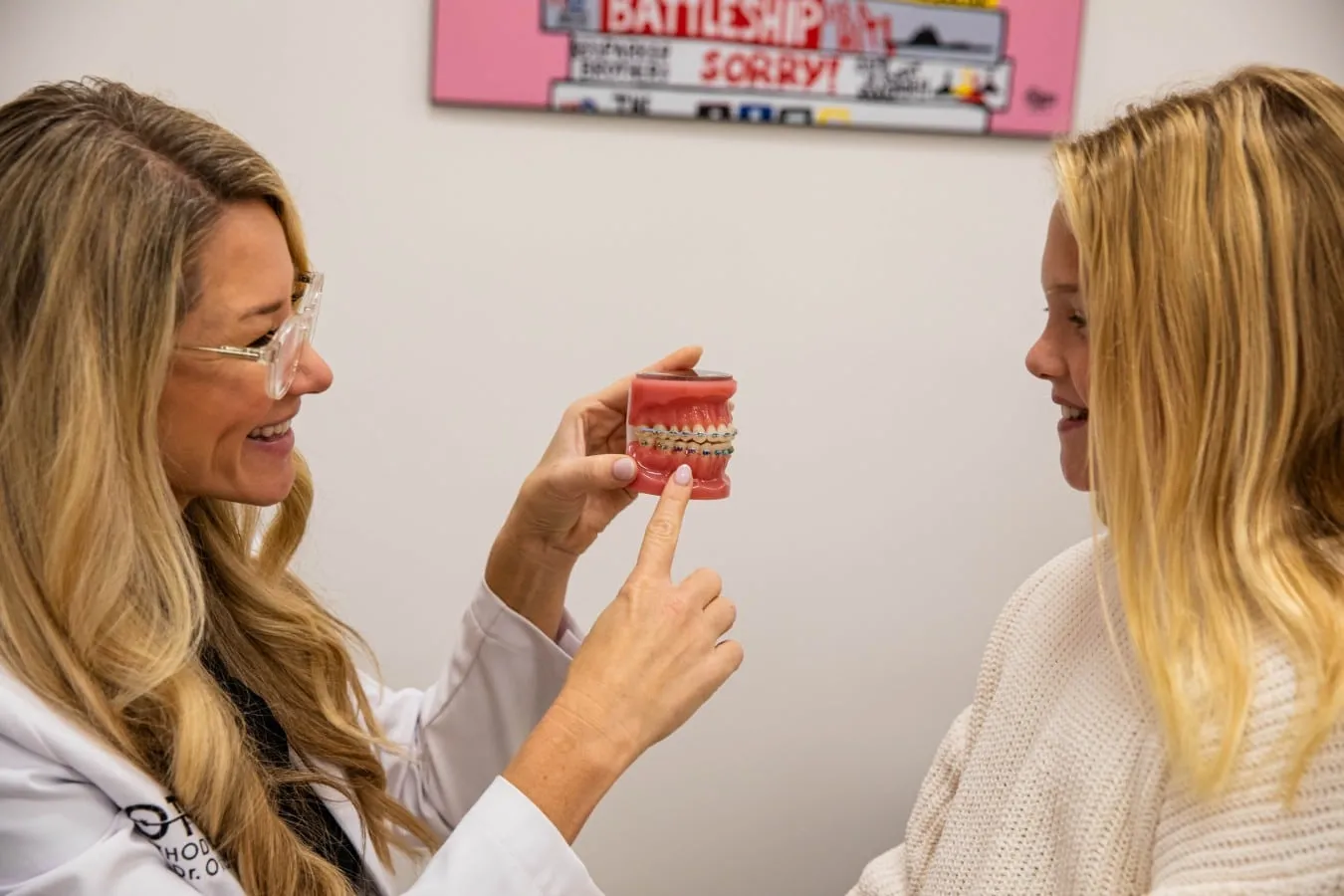
Getting braces is a big decision, and it's completely normal to have questions before you start. Whether you're considering treatment for yourself or your child, understanding braces basics helps you feel confident about what's ahead. Every patient deserves clear answers and care that fits their goals throughout treatment, and this guide breaks down the essentials so you walk into your first appointment feeling informed.
Let's walk through what you need to know about braces, from how they work to what you can expect during treatment.
What Are Braces?
Braces are orthodontic appliances that gradually shift teeth into proper alignment by applying gentle, constant pressure over time. A typical system uses three components working together: brackets bonded to each tooth, archwires that connect the brackets, and elastics that fine-tune how the upper and lower teeth meet. This combination corrects a range of dental concerns safely and predictably.
Brackets attach directly to each tooth and act as anchors. Archwires connect the brackets and guide teeth into their planned positions. Elastics (rubber bands) help correct how your upper and lower teeth fit together. Board-certified orthodontists oversee the design and adjustment of each system so that every component works in harmony.
Braces can address:
- Crowded or overlapping teeth
- Gaps and spacing issues
- Overbites, underbites, and crossbites
- Jaw alignment issues
Treatment length varies based on your specific needs. Most patients wear braces for 12 to 36 months , though you'll receive a more accurate timeline during your complimentary consult. For families across the St. Louis area, these timelines are a helpful starting point for planning around school years, sports seasons, and big life events.
How Do Braces Work?
Braces work by applying gentle, constant pressure to teeth, triggering bone remodeling that allows teeth to shift into proper alignment over 12 to 36 months . When pressure is applied to a tooth, the bone on one side breaks down while new bone forms on the other side. Teeth move steadily into better positions as this biological process unfolds.
Here's what happens during treatment:
The archwire does the heavy lifting. Each wire is bent and shaped to guide your teeth into place. As the wire tries to return to its original shape, it pulls your teeth along with it.
Adjustments keep things moving. Every 4 to 8 weeks , you'll visit the office for adjustments. We'll tighten or replace the archwire and check your progress against the treatment plan.
Elastics fine-tune your bite. When upper and lower jaws don't line up, rubber bands connect brackets on different teeth to shift the bite into balance. Wearing them as directed makes a measurable difference in how quickly things move.
Treatment moves through clear phases. First, we level and align the teeth. Next comes closing gaps and correcting the bite. Finally, small refinements perfect your smile. Sticking to the appointment schedule and following at-home instructions keeps each phase on track, and consistent communication with your doctor helps catch any small issues before they slow things down.
Benefits of Braces Treatment
Braces do more than create a beautiful smile. They're good for your long-term oral health and daily function.
Easier oral hygiene. Straight teeth are simpler to brush and floss. When teeth overlap or crowd together, food and plaque get trapped in hard-to-reach spots. Proper alignment makes daily cleaning more effective and can reduce the chance of cavities forming between teeth.
Better bite function. When your teeth fit together correctly, chewing becomes more efficient. You'll also reduce strain on your jaw joints and muscles.
A lower risk of dental issues is another payoff. Misaligned teeth wear unevenly over time, and they're more prone to decay and gum disease. Correcting alignment now can prevent bigger issues later.
Improved confidence. There's no denying the boost that comes with loving your smile. Many patients tell us they feel more comfortable smiling in photos and social situations after treatment.
Clearer speech. In some cases, tooth positioning affects how you pronounce certain sounds. Braces can help improve speech clarity.
According to the American Association of Orthodontists, orthodontic treatment can improve both function and appearance while supporting overall dental health.
Types of Braces: Comparing Your Options
Today's braces come in several styles. Each has its own advantages depending on your needs, lifestyle, and budget.
| Type | Visibility | Best For | Typical Treatment Time | Considerations |
|---|---|---|---|---|
| Traditional Metal | Most visible | All cases, including complex | 18-24 months | Most affordable, extremely durable |
| Ceramic | Less visible (tooth-colored) | Teens and adults wanting discretion | 18-30 months | Slightly higher cost, requires careful cleaning |
| Self-Ligating | Similar to metal or ceramic | Patients wanting fewer appointments | 18-24 months | May reduce treatment time for some cases |
| Clear Aligners | Nearly invisible | Mild to moderate cases | 12-18 months | Removable, requires discipline to wear 22+ hours daily |
Traditional metal braces remain the most popular choice. They're reliable, effective for even complex cases, and typically the most budget-friendly option.
Ceramic braces use tooth-colored or clear brackets that blend with your enamel. They work just like metal braces but offer a more subtle appearance.
Self-ligating braces use special clips instead of elastics to hold the archwire. This design may mean fewer adjustment appointments and easier cleaning.
Clear aligners like Invisalign offer a removable alternative. As a diamond plus Invisalign provider, our practice treats everyone with clear aligners. They work best for mild to moderate alignment issues.
The right option depends on your specific situation, and an in-person evaluation is the best way to compare.
What Affects the Cost of Braces?
Several factors influence what you'll pay for orthodontic treatment:
- Case complexity: More severe misalignment or bite issues typically require longer treatment.
- Type of braces: Ceramic and self-ligating options usually cost more than traditional metal.
- Treatment length: Longer treatment means more appointments and materials.
- Additional appliances: Some patients need expanders, headgear, or other devices.
- Your location: Costs vary by region and practice.
The good news? Most practices offer flexible payment options. Low monthly payment structures are common and can help spread the cost across the length of treatment, which makes orthodontics more accessible for families balancing other expenses. Many dental insurance plans also include orthodontic coverage, which can significantly reduce out-of-pocket costs, and some HSA or FSA accounts can be applied to treatment as well.
When comparing costs, it helps to ask about what's included. Some quoted prices cover retainers, follow-up visits, and minor repairs, while others bill those separately. Understanding the full picture upfront prevents surprises later. Many practices, including those serving the St. Louis area, provide written treatment estimates so you can review numbers before committing. A complimentary consult is a great chance to ask these questions, compare options, and decide what fits your budget and goals best.
Are You a Candidate for Braces?
Wondering if braces are right for you? Here are common signs that orthodontic treatment could help:
- Teeth that are crooked, crowded, or overlapping
- Noticeable gaps between teeth
- An overbite (upper teeth protrude over lower teeth)
- An underbite (lower teeth sit in front of upper teeth)
- A crossbite (some upper teeth sit inside lower teeth)
- Difficulty chewing or biting
- Jaw discomfort or clicking
Age isn't a barrier. While many patients start treatment as teens, adults make up a growing portion of orthodontic patients. The AAO recommends children have their first orthodontic evaluation by age 7 , and adults can absolutely benefit from treatment too. Whether you're a teen heading into high school or a parent who skipped braces years ago, today's options make treatment realistic for nearly every schedule and lifestyle.
Certain health considerations matter as well. Healthy gums and supporting bone are important for safe tooth movement, so any active gum disease or untreated cavities should be addressed first. Smokers and patients with certain medical conditions may need additional planning, but very few situations rule out orthodontic treatment entirely. Across the St. Louis area, board-certified orthodontists routinely treat patients with a wide range of dental histories.
The only way to know for sure if braces are right for you is through a professional evaluation. During this visit, the doctor will examine your teeth, take X-rays or digital scans, review your medical history, and discuss your goals before recommending an approach. Otto Orthodontics offers this kind of careful, conversation-driven evaluation so you can make an informed choice.
Frequently Asked Questions About Braces
How long does treatment take?
Most patients wear braces for 18 to 24 months , though treatment can range from 12 to 36 months. Your timeline depends on the complexity of your case and how well you follow your doctor's instructions. Keeping appointments and wearing elastics as directed can help you finish on schedule.
Do braces hurt?
You may notice mild soreness after getting braces and following adjustments. This typically lasts 2 to 3 days and responds well to over-the-counter relief, soft foods like yogurt and pasta, and orthodontic wax for any spots that rub against the cheeks or lips. Most patients adjust quickly and find braces more comfortable than expected after the first week.
Can adults get braces?
Absolutely. More adults are choosing orthodontic treatment than ever before. Teeth can be moved at any age, and today's options like ceramic braces and clear aligners are less noticeable for adults at work or in social settings.
What foods should I avoid?
Sticky, hard, and chewy foods can damage brackets and wires. Skip popcorn, hard candies, ice, caramel, and gum. Cut apples and carrots into small pieces rather than biting directly into them. You'll get a complete list at your first appointment.
How often are adjustment appointments?
Plan to visit the office every 4 to 8 weeks for adjustments. These appointments are usually quick, lasting about 15 to 30 minutes. Regular visits keep your treatment on track.
Will I need a retainer after braces?
Yes. Retainers are essential for maintaining your results. After your braces come off, you'll wear a retainer to prevent teeth from shifting back. Most patients wear retainers full-time at first, then transition to nighttime wear.
Understanding braces basics is the first step toward a healthier, straighter smile. A complimentary consult is the easiest way to get answers tailored to your situation and to map out what treatment could look like for you. We can't wait to see you soon!